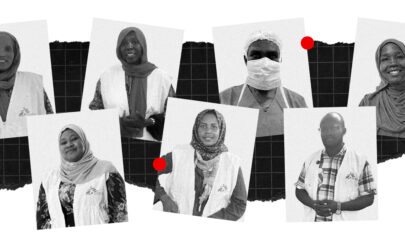
MSF staff profile
In 2015, I was studying engineering at university when a beloved family member died. I took a break from my studies, but in Eritrea, if you are not a student or government worker, you will be forced into the military with no option to leave.
I had. no choice but to go. Seeking asylum in neighbouring Sudan was not a good option – there are around two million Eritrean refugees there, many of them living in difficult conditions in refugee camps. My only option was to travel on to Libya.
A DANGEROUS JOURNEY
There’s no legal route from Sudan to Libya for someone in my situation. On several occasions, I was detained or beaten by people smugglers until I could pay them. They forced us to sleep in windowless rooms. They fed us very little and when people grew sick – as I did – there was no possibility of seeing a doctor.
“I now speak eight languages, which I use in my job as an MSF community health worker, supporting refugees and migrants.”
The final stage of my journey was a 12-hour drive hidden in an empty water tanker. There were 50 of us inside. It was easily 45 C. People were vomiting and fainting, burning every time they touched the hot metal walls of the tank.
The first time I attempted the crossing from Tripoli to Italy, our boat was intercepted by a kidnapping gang. They brought us back to Libya and said we’d have to pay $1,500 to be released. Those who couldn’t were starved, tortured, beaten or shot at.
When I was released, I went back to the original smuggler, who allowed me on the boat again. I was in the cargo hold, in the dark. It was so full people around me were fainting.
RESCUE
We used the satellite phone to call for rescue and, at last, we saw a ship approaching us. It was Doctors Without Borders/ Médecins Sans Frontières (MSF).
When we got on the MSF boat, there were doctors and nurses. We got clothes, medication, food and water. It’s hard to explain how great the relief was. That was Sept. 2, 2015.
I did not stay in Italy. I knew people who had stayed there and were suffering. By chance, I met an Italian family who helped refugees – I will never forget their kindness. I went to Germany first, where my uncle lived. He helped me buy a ticket to Belgium, where I met my aunt and entered a claim for asylum.
GIVING BACK
I’ve been living in Belgium since then. I now speak eight languages, which I use in my job as an MSF community health worker, supporting refugees and migrants to access healthcare. There are many stereotypes about migrants. But I know thousands of people like me. Since I got here, I’ve worked hard to support my family. Refugees and migrants contribute to the economy and development of the country in which they live. We just want to build a future. Sometimes I think back to a moment on the MSF ship, when we were rescued. I spoke to the cultural mediator, an Iraqi man. I asked him what qualifications I would need to do a job like his one day. He told me there was no special degree needed, just strong communication skills and a humanitarian heart. All these years later, here I am.