For over two years, Doctors Without Borders/Médecins Sans Frontières (MSF) staff in Palestine have been living and working through a catastrophic war. They share their testimonies about trauma, loss and small moments that bring them comfort and joy
These stories were originally featured on the online storytelling platform Humans of New York and was co-created by Brandon Stanton and MSF communications specialist for Gaza Nour Alsaqqa.
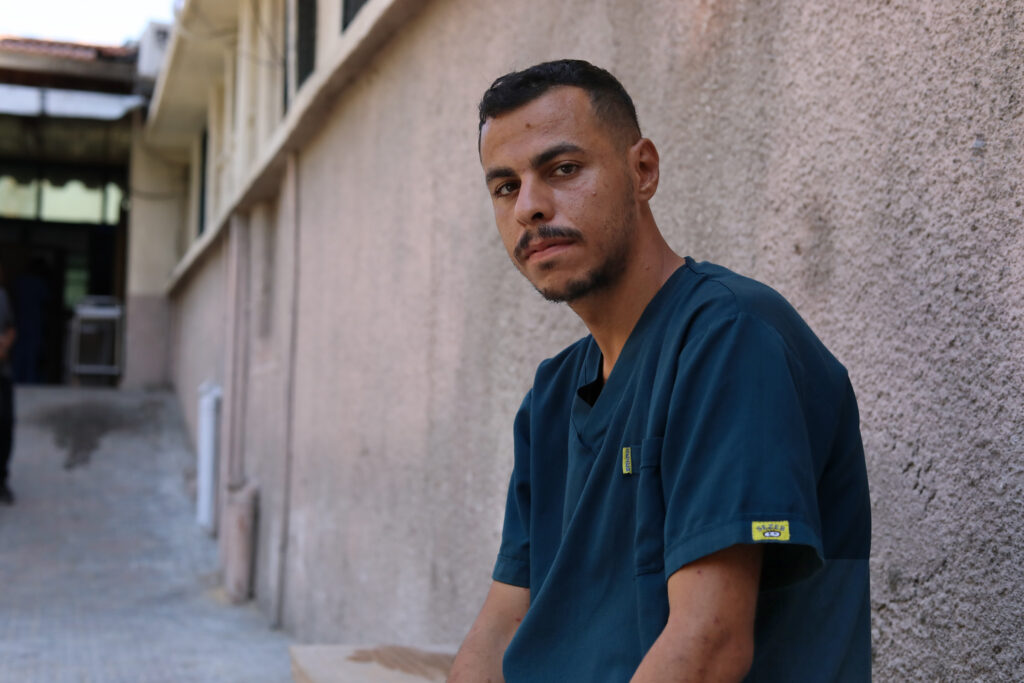
MUHAMMAD KULLAB, MSF DOCTOR
I was making my rounds when I heard a bombing. My family lives near the hospital. Usually, when a bombing is that close, I would call them immediately. But on that day, I didn’t. Maybe I’d grown desensitized. But after an hour, I began to notice that the nurses were acting shifty around me. One of the nurses asked if I’d heard from my family. That’s when I knew.
l started running to the ER. The first person I found was my father. He’d been in the explosion area; he was stunned. My sister was next to him, also in shock. I asked about my mother and the nurse told me that she was in the ICU. The ICU is three floors up from the ER, so I immediately began running up the stairs. The nurse ran after me. He told me: ‘I’m sorry. I didn’t know how to tell you. But your mother is deceased.’ I fell to the floor. They led me to a giant, white bag. I unzipped it. And I saw her face. She had bled out through her legs, so her face was untouched. I wanted so badly to kiss her in that moment. So I kissed her. And I began to hug her. But they pulled me away and covered her again
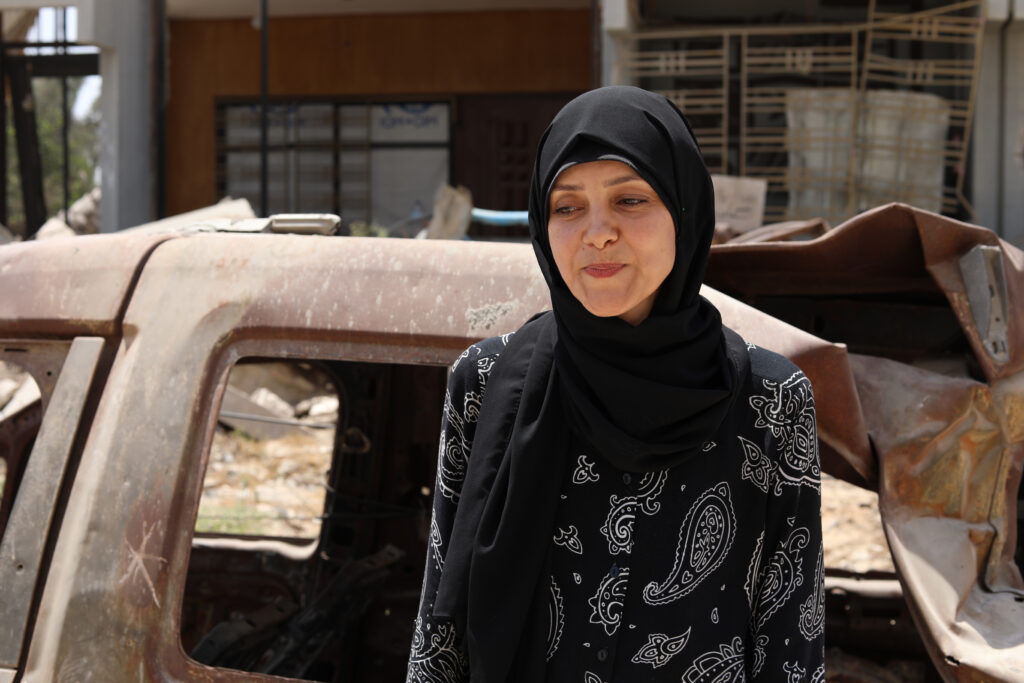
KHOLOUD AL-SEDAWI, MSF COORDINATION SUPPORT
I cannot cry. I want to, but I can’t. I used to be a schoolteacher. Now I see the children walking in the streets. They come into our clinic. Some of them are mutilated: they’ve lost a leg, or an arm. Even the ones who aren’t injured are changing.
Before the war it was not normal to find a child who wasn’t in school. But now Gaza’s children haven’t been to school in two years. They’re beginning to think: ‘I will just work to bring my family food or water.’ Even my own daughter; she’s 12 years old. She was a leader in school and dreamed to be a doctor. She has a cousin in Canada, the same age. They have video calls and my daughter can see the difference. Recently, she told me: ‘I won’t be a doctor anymore.’ This broke my heart, but still, I could not cry.
A few months ago, they bombed the house of my husband’s family. He lost 15 members of his family that day. His mother, his father, his brother, were beneath the rubble. I went to collect the body parts. I had to start looking: this is the head for who? This arm, this leg, is for who? Afterwards I sat alone, and I tried to cry. But even then, I could not.
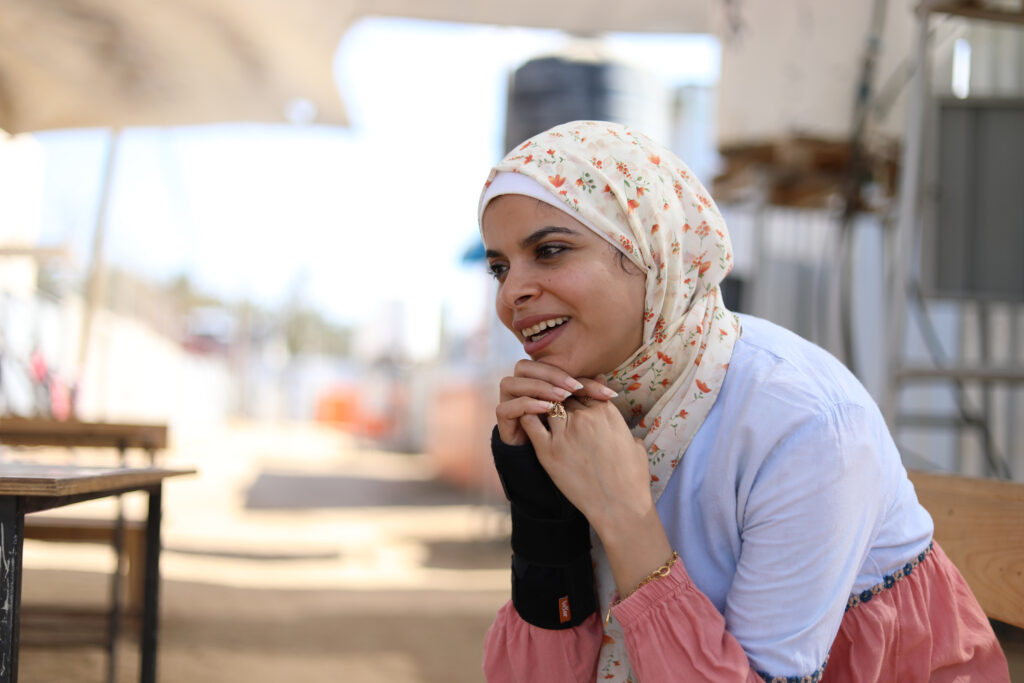
WEAM ATALLAH, MSF PHARMACEUTICAL SUPERVISOR
I’ve closed my social media. From Gaza it’s all bad news: someone’s dying, someone’s been bombed, someone’s been displaced. Then everywhere else in the world, everyone is living their lives. Literally the smallest thing that they do: it makes me jealous. Like eating ice cream. This is my favourite food. I’ve gone two years without any ice cream. I don’t want to feel envious of anyone, so I’m trying not to see it.
Right now, our home is partially destroyed, but we are still living in it. Every day when I come home from work, my two-year-old niece is waiting for me at the front door. Her name is Hanan; it means kindness. We do everything we can to protect her, to give her a childhood. Her birthday was two weeks ago. We had dancing all night. There was bombing all around us, but we just turned up the volume and tried to disconnect from all the noise. Sugar is impossible to get in Gaza now; but we gathered all the sugar we could. Everyone contributed. And with this sugar we made a cake, and cinnamon rolls, and sweet tea with mint. Hanan eats nothing but canned food. So when she saw that cake, she started to scream. All the children started to scream; you can’t imagine their joy.