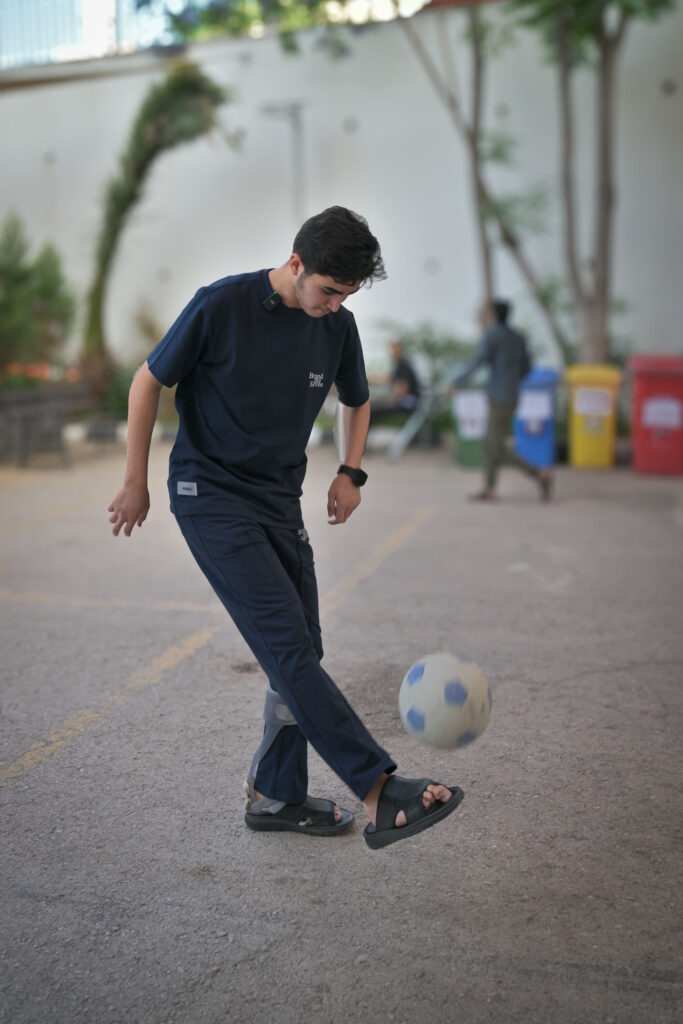
In the physiotherapy room at the Doctors Without Borders/Médecins Sans Frontières (MSF) reconstructive surgery hospital in Amman, Iyad as he passes a football with his friend. It’s part of Iyad’s physiotherapy session.
“It helps me a lot when Hossam joins,” says Iyad. “We joke a lot, but we also support each other a lot. Physical pain goes away when you have someone to laugh with.” Iyad and Hossam have become close friends since meeting at the hospital months ago. They spend time outside of sessions playing soccer, sharing meals and challenging each other on the PlayStation.
TWO FRIENDS, TWO LIFE-CHANGING INJURIES
Iyad, from Nuseirat refugee camp in Gaza, was critically injured after being shot by Israeli forces in the back of his thigh while out looking for food with friends. “There was a sudden gunfire. It came out of nowhere,” he says. “My leg got hit. Everyone started running. I was so scared.”
The bullet caused severe nerve injuries. After emergency surgeries at Al-Awda and Al-Aqsa hospitals in Gaza, MSF brought him to Amman for specialized care. For almost a year, Iyad has been doing daily physiotherapy to regain movement and sensation in his leg.
Hossam was nine years old when he was severely injured during an explosion in his hometown Samarra, Iraq. Burn injuries from the blast cover his face, neck, abdomen, back and hand. Hossam had 17 surgeries in Iraq before arriving at the reconstructive surgery hospital in 2019. Since then, he has undergone 10 more surgeries, countless physiotherapy sessions and Transparent Neck Orthosis therapy – specialized 3D printed masks that help with mobility and reduce scarring.
“My life was destroyed and my future was lost. I left school even though my dream was to become a pilot one day,” says Hossam.
“Life here is nothing like it was when I was still at home. It’s different. I’m not surrounded by my people and my family.”
Iyad knows this feeling. “Back home in Gaza, I was always surrounded by people. Despite the hunger, danger and bombing, I felt safe surrounded by my family and friends. Coming here, I was scared. I worried about what life in the hospital would be like and whether I would have any friends. On top of having these injuries, the feeling of being alone makes it much more painful. You need someone to talk to. It helps to forget the pain.”
“We understand each other because we know what it feels like. We share the same pain.”
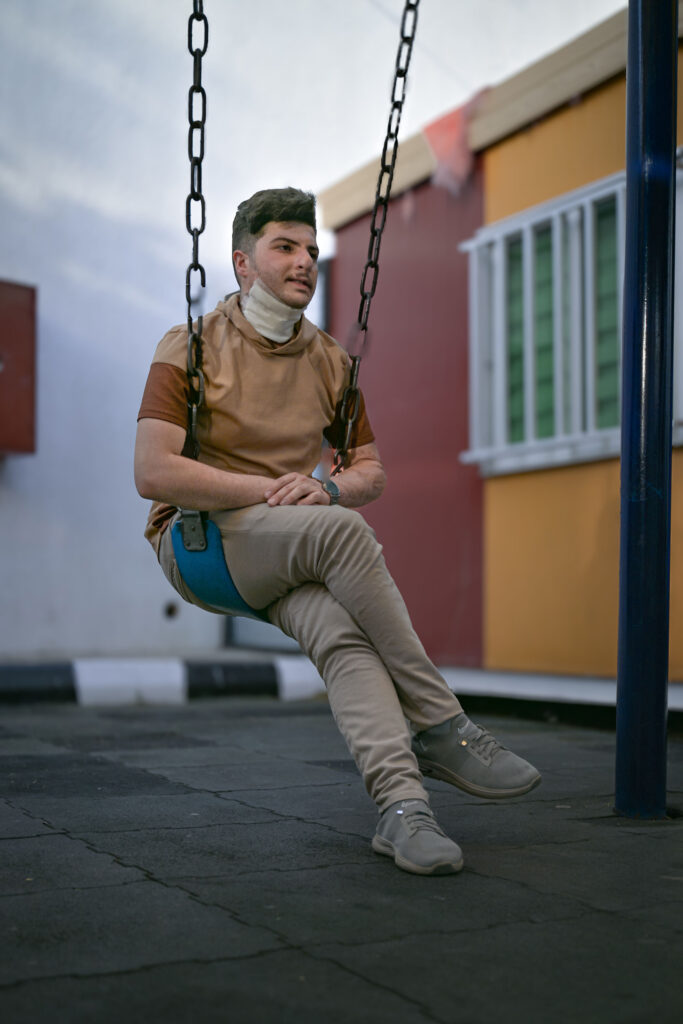
THE IMPORTANCE OF PEER SUPPORT
MSF’s mental health teams at the reconstructive surgery hospital recognize the importance of social support. Some patients arrive with caretakers, while others, like Hossam, come alone. Most require multiple surgeries and extended rehabilitation, leading to long separations from their families. “Social support from peers is a shield against depression, posttraumatic stress disorder and anxiety,” says Mahmood, MSF clinical psychologist. “Patients here support each other in ways we can’t always provide as staff. Sharing their experiences helps them heal. It helps them cope with the pain, the long treatment, and the distance from home. For war survivors, recovery goes beyond surgery.”
“People here are of different nationalities and have different injuries,” says Hossam “but there’s no divide between us. We’re brothers and sisters. We understand each other because we know what it feels like. We share the same pain.”
When Iyad arrived, he couldn’t walk without assistance. Now, he walks independently, though the sensation in his foot and ankle hasn’t returned.
“Before the injury I had big dreams to become a soccer player,” he says. “Now, those dreams are gone. I just hope to recover and regain my health.”
Hossam will need years of treatment to further release the contractures in his skin, caused by severe scarring. In the future, he hopes to not be affected by his injury and to have a family and career.
After their treatment, Iyad and Hossam hope to visit each other. “We’re not going to give up on each other,” says Iyad. “It’s hard to let go of good people.”
PEER SUPPORT AT AN MSF HOSPITAL
The team encourages peer support – patients offering and receiving support based on shared experiences. This happens through group therapy and informally through bonds formed between patients.