I am Narin Fandoglu – human before I became a humanitarian. My journey with Doctors Without Borders/Médecins Sans Frontières (MSF) began in 2016.
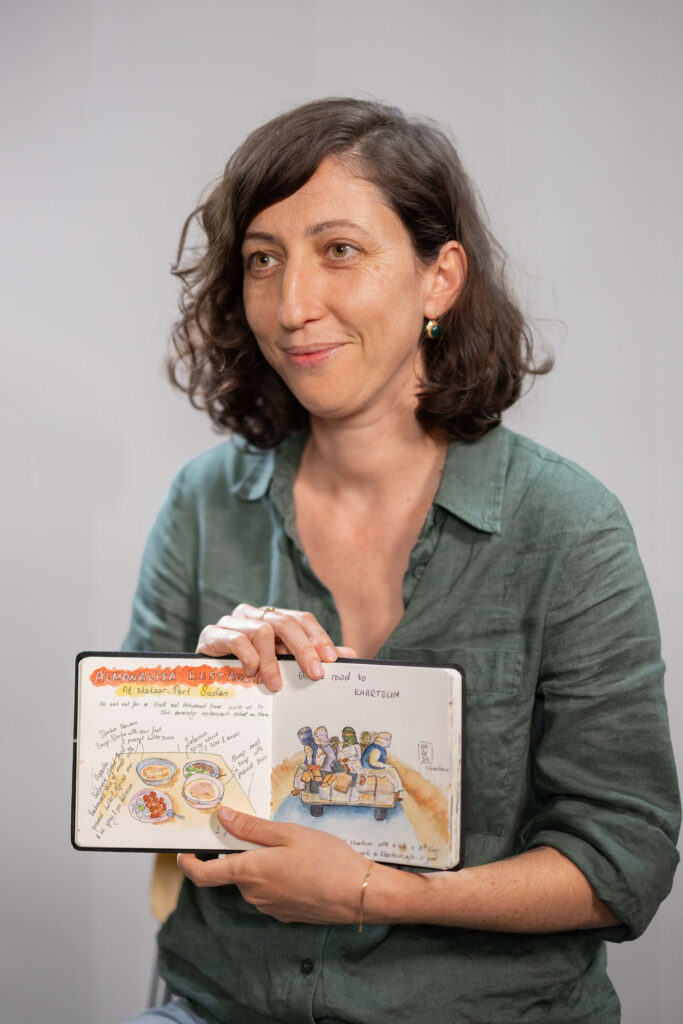
Almost a decade working with MSF has meant many assignments and countless stories. In 2017, I began to draw what I saw in my watercolour journal. Sketching became my way to slow down, to process my emotions, to keep going.
I visited Sudan twice in 2025, once to the east, once to the west. I wanted to document what I was seeing, what I was feeling. So, I sketched little details: markets, coffee shops, roads, food. To show that Sudan is more than conflict. Alongside war, there is resilience, beauty and everyday life.
When I shared a drawing of the pyramids in Sudan [with my community back home], many people didn’t even know they existed. That sketch sparked conversations about history and culture, not only about war.
In El Geneina, the capital of West Darfur, I painted a clay water pot I saw in the street. My colleagues explained that neighbours maintain these pots so anyone passing by can drink cool water. A simple, generous tradition that endures even in war. I found that deeply moving, and I wanted to honour it in paint.
“Our work is not about helper and receiver. It is solidarity between humans.”
On the road from Port Sudan to Khartoum, I remember a woman making coffee. Her stand was set up in front of a half-ruined house. At first, she seemed alone. Then I noticed a baby on a bed behind her, and a toddler playing nearby. She worked while caring for her children. Later, I painted her – not a portrait, but a memory, a mixture of her presence and the impression she left.
When I see refugees or people we support, I recognize myself in them. I could be in their place; they could be in mine. Our work is not about helper and receiver. It is solidarity between humans.
Now, I want to share [my sketches] with a wider audience, with you who are reading my words. I want people to see Sudan, a country that feels forgotten. We are facing not only a humanitarian crisis, but a crisis of compassion. Because compassion begins with seeing, with refusing to turn away. We cannot stop the war with drawings, but we can refuse to look away, and we can bear witness.