In April 2026, Sudan marked three years of a war that has devastated cities, collapsed essential services and forced millions of people to flee. Among them are our Doctors Without Borders/ Médecins Sans Frontières (MSF) colleagues, who make daily efforts to sustain hope.
Each of our Sudanese colleagues has lost something because of the war. From the most evident losses — their loved ones, relatives and friends — to those that may seem small at first glance, like their routines, their sense of achievement and their peace of mind.
“Do not lose hope. One day, we will be united once again in this homeland.”
Al Douri, MSF epidemiologist
Yet every single day they wake up and step outside their homes to reach MSF facilities and offices. They do so to help others whose lives have also been stripped of almost everything dear to them.
We asked our colleagues to tell us what the war has taken from them and what motivates them to continue working despite their losses.
SONDOS,
MATERNITY WARD STAFF IN WEST DARFUR
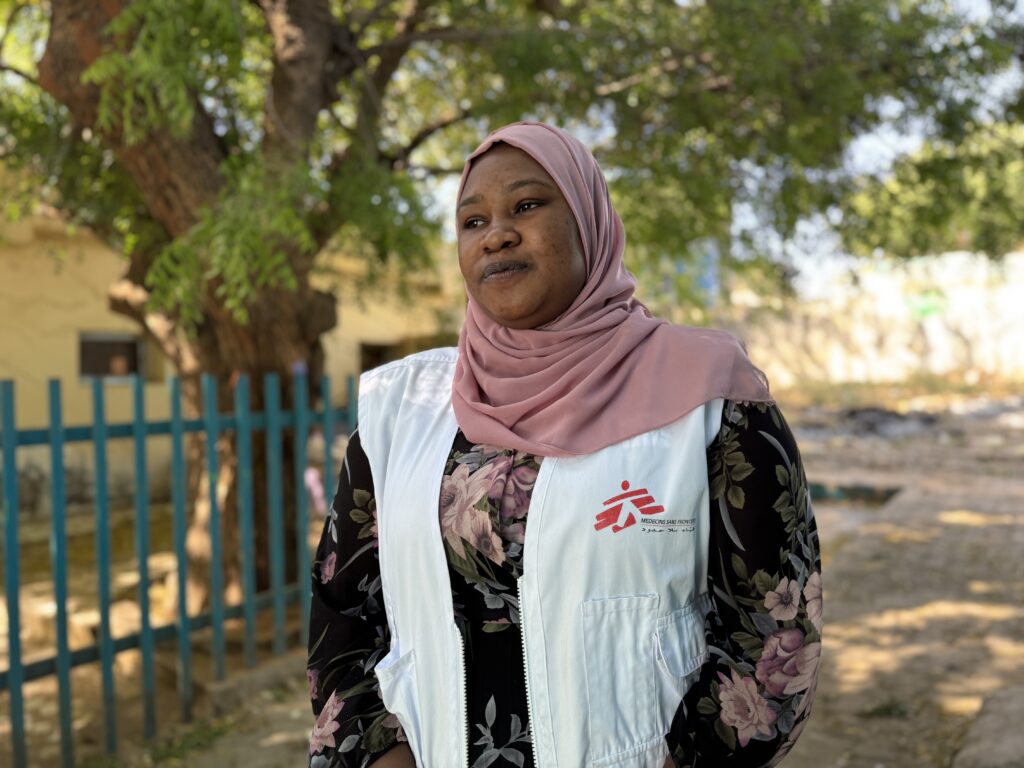
In El Geneina, West Darfur, the first thing the war took away from Sondos was the chance to graduate. “I was in my final year, but my university closed and never reopened,” she says. “The war took away my greatest achievement.”
Without a certificate, she cannot work as a nurse, so she works as a medical interpreter at El Geneina teaching hospital with MSF. The conflict also forced some of her family members to flee the city. When they returned, she discovered that her brother, her aunt and several other relatives had died.
“It became the most difficult year of my life,” she says. But with the strength she had left, she joined a group of volunteers who reopened the hospital’s emergency room. “We just wanted to help our community because they were suffering and had no facilities,” Sondos says.
AL DOURI,
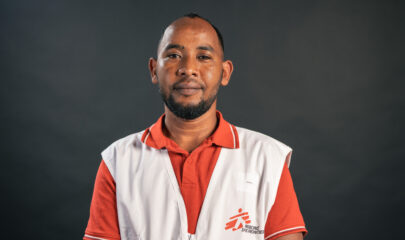
EPIDEMIOLOGIST IN KHARTOUM
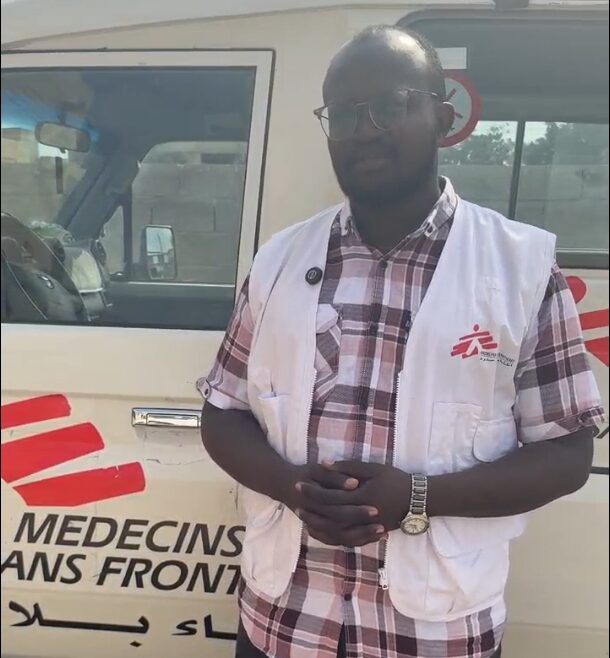
When the war erupted, Al Douri was forcibly displaced from Khartoum, his home city. When he returned, he found his home in ruins and himself among the millions of Sudanese who had lost everything.
Now, at Bashair teaching hospital, he says he sees “pain and despair” in every patient. Working also in camps for displaced people, Al Douri meets families who have travelled for days in search of safety.
He describes the ongoing crisis as a staggering blow to a “peaceful and very welcoming” people. “We found ourselves in a war that took everything from us,” he says. Yet he refuses to surrender to bitterness. He carries a defiant message for his fellow Sudanese: “Do not lose hope. One day, we will be united once again in this homeland.” But for that to happen, he says the world cannot remain silent. “Don’t stop talking about Sudan and the suffering of the Sudanese people.”
ALTAYEB,
MSF SURGEON IN TAWILA
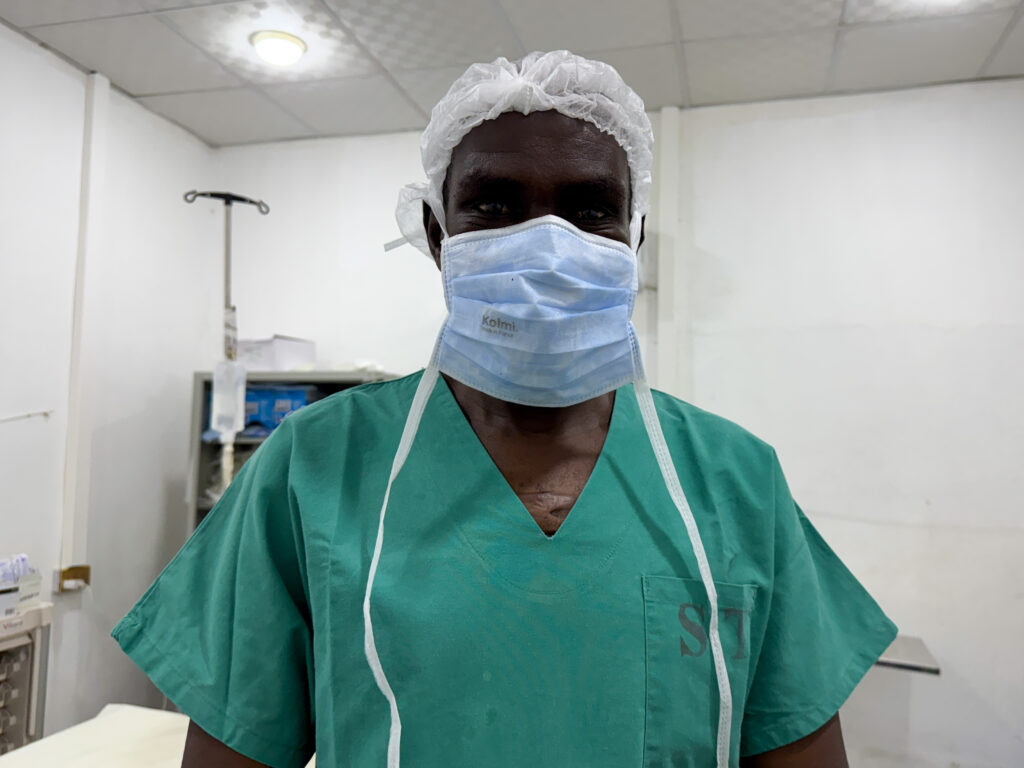
Altayeb, an orthopedic surgeon in North Darfur, fled El Fasher and arrived at the MSF-supported Tawila hospital one week before the city was fully taken over by the Rapid Support Forces. Together with his pregnant wife, he left behind the comfortable life they had built for themselves.
His first task as a surgeon at the Tawila hospital was to clean and suture the wound of a patient who had lost part of his leg during the capture of El Fasher. The patient was Altayeb’s distant cousin, who had travelled three days by donkey cart with an open wound from a stray bullet before reaching the hospital.
Altayeb’s initial motivation for fleeing was to find a safe place for his pregnant wife to give birth. His motivation for continuing to provide care, however, comes from the patients he cares for. “Some of my patients from there are now here,” he says.