During a community discussion in Baalbek- Hermel with Lebanese and Syrian families about their health needs, a child hovered timidly at the edge of the conversation and asked, “Can we draw? We just want to draw.”
In northeastern Lebanon, children from both refugee and host communities are growing up under immense pressure. Sleep disturbances, anxiety, withdrawal and difficulty concentrating are a few of the conditions Doctors Without Borders/ Médecins Sans Frontières (MSF) mental health teams see among children. Many struggle to articulate fear, grief and longing, especially in environments where adults themselves are overwhelmed and focused on day-to-day survival and coping.
For children, feelings and experiences they don’t fully understand often surface indirectly. Art-based psychosocial support allows them to express what they cannot yet name. That’s why we began organizing regular art-based sessions at our mobile and fixed clinics in Hermel and Arsa. The effects were immediate.
WHAT DRAWINGS REVEAL ABOUT CHILDREN’S PSYCHOLOGY
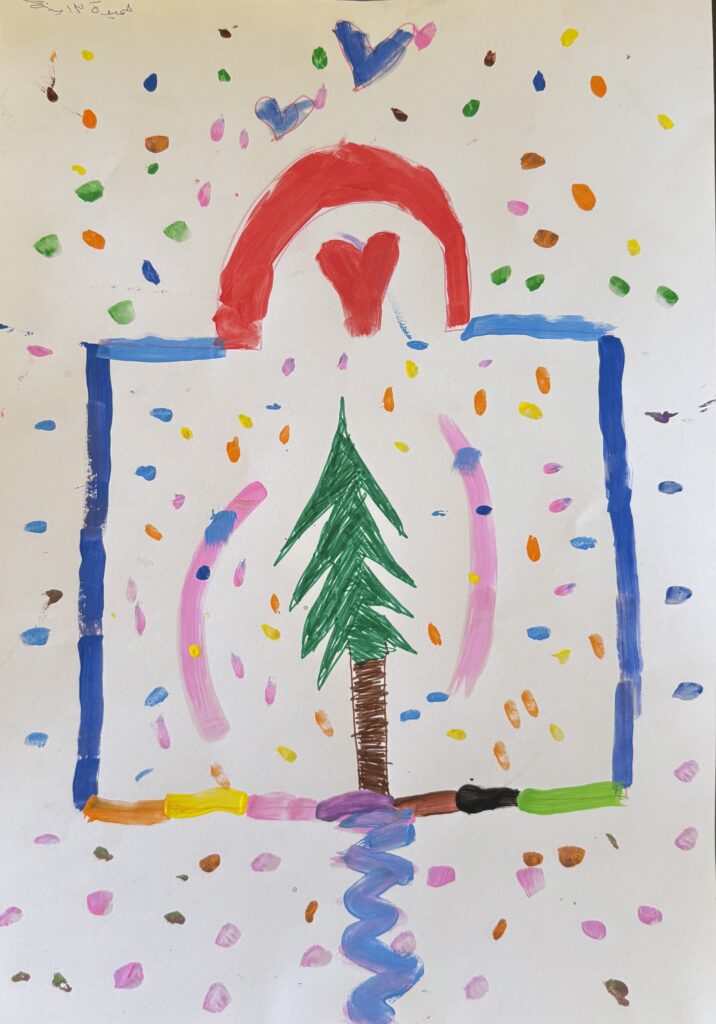
Many children drew homes they no longer live in. Others drew trees, gardens, animals and open skies. Drawing familiar scenes allows them to reconnect with memories of care, family and stability, all of which are essential elements for emotional regulation and resilience.
Other drawings included imagery associated with fear: drones in the sky, men carrying guns, dark clouds. These images often appeared alongside peaceful scenes, showing how trauma and hope coexist in a child’s internal world. This duality is common in children affected by conflict — they are not only “victims” of fear, but also actively making sense of overwhelming experiences and trying to integrate those experiences.
THE IMPACTS OF ART THERAPY
We have seen the positive impact of these drawing sessions. Parents tell us their children sleep better, speak more openly or show fewer behavioural outbursts.
Baalbek-Hermel is a region of striking beauty, but also one that has absorbed years of hardship. People are generous and welcoming, yet pain is often kept private. Many people seek help only when distress becomes unbearable.
Here, these drawings are more than images on paper. They are evidence that even in the aftermath of loss, children continue to imagine, remember and hope.